

Commercial Energy Storage in New Jersey
Commercial battery storage pairs with your solar system to cut demand charges, the peak-usage fees that show up separately from your electricity rate on a commercial NJ utility bill.
We size storage against your actual demand profile and NJ ESIP incentive and federal ITC rules, so the battery is sized to offset real charges, not just to look good on paper.
Years in the Energy and Infrastructure Industry
Client Satisfaction
Projects Completed
Commercial Solar Storage in NJ, built for demand-charge offset
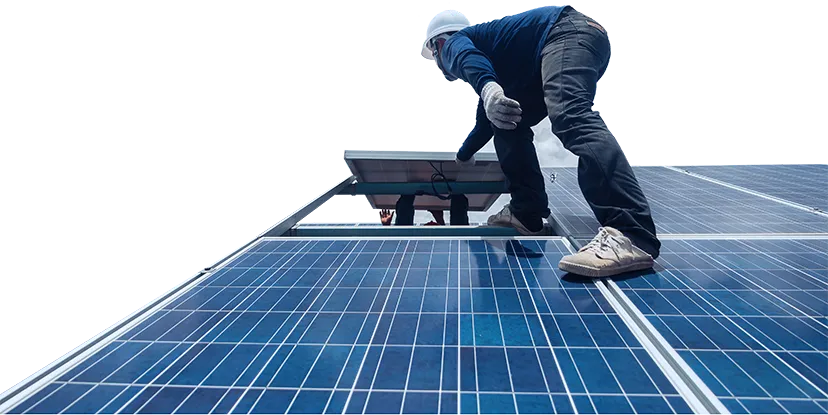
For commercial solar battery storage in NJ we deliver cleaner on-site power through site and bill analysis, constraint checks, and production modeling, so savings and timelines stay predictable.
- Lower Energy Costs
- Increase Property Value
- Environmentally Friendly
- Energy Independence
Commercial Solar Storage NJ: when batteries actually pencil
- Electric bill review and usage pattern check
- Roof and site constraint review including access and safety
- Preliminary layout and sizing assumptions you can validate
- Early notes on permitting and interconnection requirements
- Clear next steps for design, pricing, and timelines
Incentives for commercial solar storage, New Jersey
What we typically review (eligibility and amounts vary):
Cost coverage:
Some projects see 40% to 60% offset after stacking programs; eligibility and timing vary.
Tax credits:
Federal credits may reduce net cost; we help document requirements for your accountant.
NJ incentives:
Production-based programs can add ongoing value tied to energy output; availability depends on program status.
Payback modeling:
We run conservative ROI scenarios using your rates, available area, and load profile.
Our Process
Step 1: Share your bill and site details
Step 2: Design, incentives, and approvals plan
Step 3: Build, turn-on, and reporting
What’s Included in Energy Storage
Demand-charge offset modeling
Analysis of your $/kW demand charges against proposed battery dispatch profile. Sample math: a 200 kWh battery shaving 100 kW peak demand on PSE&G GLP can save ~$26,400/year in demand charges alone.
NJ Energy Storage Incentive (NJESI) registration
NJESI provides upfront capacity-based incentive for paired solar + storage. We handle program registration and documentation. Typical incentive $400 to $700/kWh for paired commercial storage.
Federal ITC paired-storage qualification
30% ITC applies to batteries when paired with solar AND charged at least 75% from solar (paired-storage rule). Standalone storage also ITC-eligible under IRA with different qualification rules. We structure for maximum benefit.
LFP vs NMC chemistry selection
Lithium-iron-phosphate (LFP) is safer and longer cycle life: typical choice for NJ commercial. NMC offers higher density but greater fire risk. We model both for your specific use case and space constraints.
Degradation modeling and augmentation plan
Calendar degradation (1.5% to 2.5%/year LFP), cycle degradation, end-of-warranty capacity targets (~70% at year 10). Augmentation budget built into financial model for replacement modules at year 8 to 10.
Fire code, ventilation, and permitting coordination
NJ fire code (IFC) requirements for battery installations include suppression, ventilation, and separation from occupied spaces. Plan review with local fire marshal coordinated as part of standard scope.
Industries We Commonly Support
Warehouses & distribution
Manufacturing
Cold storage & food processing
Retail & shopping centers
Offices & commercial real estate
Healthcare and medical facilities
Service Areas
We support commercial solar projects across New Jersey, with a strong presence in South Jersey.
Get Help With Energy Storage
Tell us what you’re trying to accomplish and what constraints you’re working around. We’ll outline feasible options and a clear path to approvals.
Frequently Asked Questions
When does battery storage make economic sense for an NJ commercial property?
Storage pencils when your utility bill has high demand charges and a sharp peak demand pattern: cold storage, manufacturing with compressor cycles, large refrigeration loads. For pure office or flat-load warehouses, storage usually doesn't pencil from energy alone.
How does the NJ Energy Storage Incentive (NJESI) program work?
NJESI provides an upfront capacity-based incentive for paired solar + storage commercial systems. Incentive amount depends on system kW and use case: typically $400 to $700/kWh for paired commercial. We handle registration.
Does the federal Investment Tax Credit apply to commercial battery storage?
Yes. The 30% ITC applies to batteries paired with solar AND charged at least 75% from solar (paired-storage rule). Standalone storage also became ITC-eligible under the IRA with different qualification rules.
How long do commercial batteries last and how do you handle degradation?
LFP batteries typically last 10 to 15 years with 70% capacity at year 10. We model degradation and budget an augmentation reserve for replacement modules at year 8 to 10 to keep useful capacity stable through system life.
Related reading
Articles supporting this service
LandAir Energy · 2050 Fairfax Avenue, Cherry Hill, NJ · 856-702-3721
Last updated: May 13, 2026