

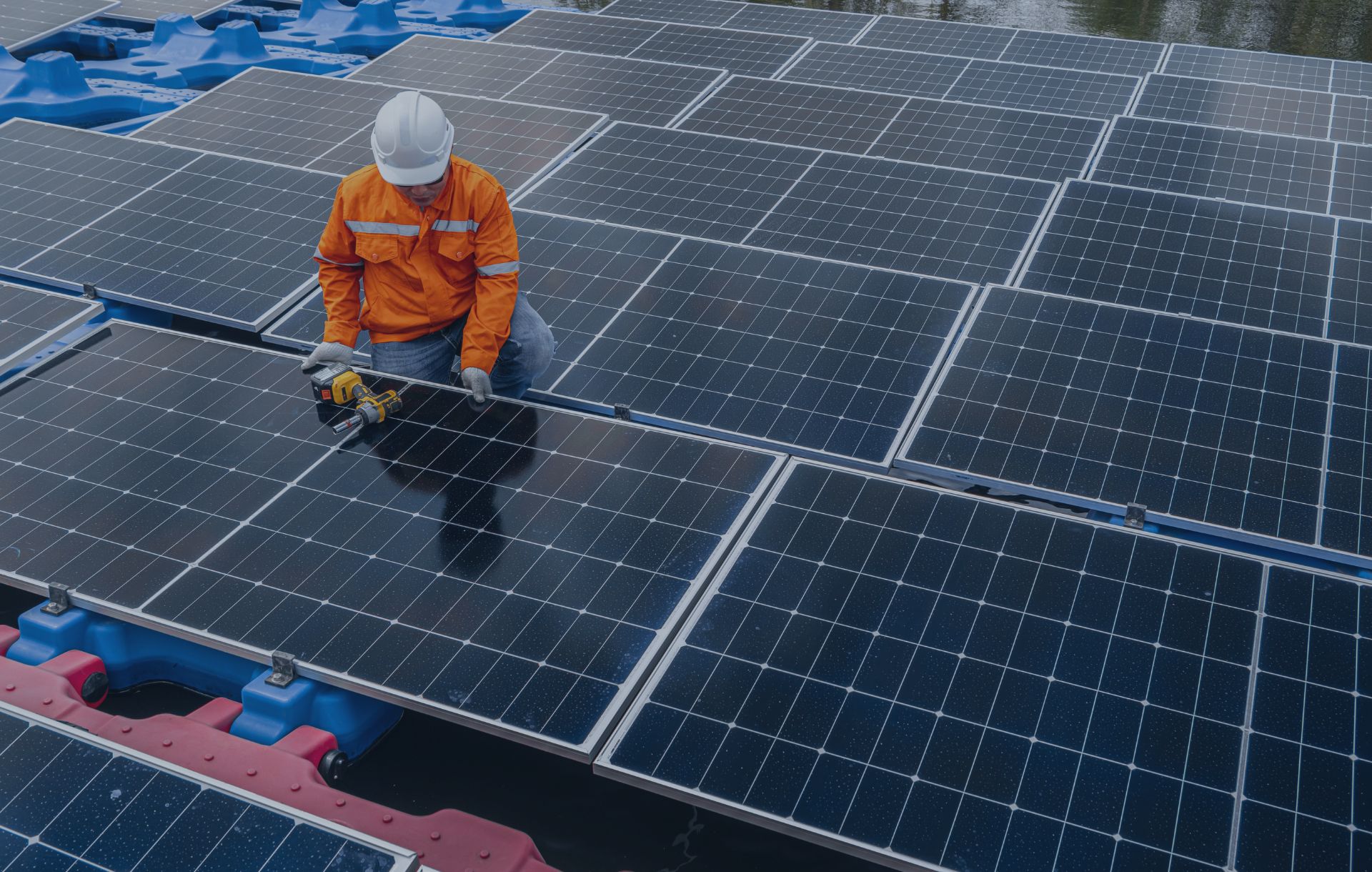
Commercial solar panels look similar from the parking lot, but the modules chosen for a warehouse, school or office roof differ in cell technology, size, warranty terms and how they handle reflected light. This guide explains what building owners in New Jersey should know about the panels themselves, so you can read a proposal with confidence and ask the right questions.
The main types of commercial solar panels
Nearly all commercial projects today use crystalline silicon modules. Within that group, a few terms come up often.
- Monocrystalline modules use cells cut from a single silicon crystal. They are the standard for commercial rooftops because they produce more power per square foot.
- PERC, TOPCon and heterojunction cells are cell designs that capture more light or lose less energy inside the cell. Proposals often name these, and the module datasheet shows how the specific product performs.
- Thin-film modules use a different material, most often cadmium telluride. They appear mainly on large ground mount projects.
- Larger format modules with more cells per panel are common on commercial roofs because fewer, larger panels can reduce racking and labor per watt.
On a commercial rooftop system, the right module balances output, weight, roof layout and wind design requirements.
Solar panel efficiency and what it means for your roof
Solar panel efficiency is the share of sunlight hitting the panel that it turns into electricity. Higher efficiency means more power from the same roof area, which matters most when roof space is the limit rather than budget.
Efficiency is only one input. A slightly less efficient panel can still be the better value if it costs less per watt and the roof has room to spare. We compare modules on cost per watt, expected output and warranty terms together, and we use the module's datasheet ratings in the energy model.
Efficiency ratings are measured under standard test conditions, so real output also depends on local weather, tilt, shading and row spacing. Datasheets list a temperature coefficient, which shows how much output drops as a panel heats up. Roof-mounted panels run warm in a New Jersey summer, so a lower temperature coefficient helps protect production on hot afternoons. Our energy model accounts for each of these factors.
When bifacial solar panels make sense
Bifacial solar panels collect light on both the front and the back. The back side picks up sunlight reflected from the surface below, so the extra output depends on how reflective that surface is and how high the panels sit above it. Research on bifacial performance shows that higher ground reflectivity and more clearance both increase rear-side gain.
- Solar carports. Panels sit well above the pavement, and light-colored surfaces underneath add reflected light. See our solar carports and canopies page.
- Ground mount arrays. Open rows with space underneath let the back side see more sky and reflected light. Learn more about ground mount solar.
- Reflective roofs. White membrane roofs reflect more light than dark ones, and tilted racking with row spacing lets the back side collect it. Panels mounted close and flat to the roof see little benefit.
Because the gain varies by site, we model bifacial output with the actual surface and mounting height before recommending it.
Solar panel warranty: product vs performance
Most commercial modules carry two separate warranties, and it helps to read them side by side.
| Warranty | What it covers | Typical terms |
|---|---|---|
| Product warranty | Defects in materials and workmanship of the panel itself | Read the exact term, exclusions and claim procedure for the proposed model |
| Performance warranty | A minimum level of power output as the panel ages | A specified minimum output at defined years, subject to the manufacturer's warranty conditions |
Inverters, racking and workmanship carry their own warranties. Ask for each one in writing, along with the manufacturer's process for submitting a claim.
Solar panel lifespan and output over time
The U.S. Department of Energy reports that the average operational lifespan of solar panels has grown to roughly 25 to 35 years. Panels keep producing during that time, but output declines slowly each year. Use the manufacturer's stated degradation curve when comparing proposals; actual field performance depends on the product and operating conditions.
Good maintenance helps a system reach that design life. Regular inspections, monitoring and prompt repairs keep production on track, which is the focus of our operations and maintenance service.
LandAir's licensed professional engineers and NABCEP-certified crews can help you compare modules for your building. Request a commercial solar assessment to see which panels fit your roof and how much they could produce.
Frequently asked questions
What type of solar panel is best for a commercial roof?
Most commercial rooftops use monocrystalline silicon modules because they produce more power per square foot. The best choice for a given roof also depends on cost per watt, weight, layout and warranty terms.
Are bifacial solar panels worth it on a flat roof?
They can be when the roof has a light, reflective membrane and the panels are tilted with space for reflected light to reach the back. Panels mounted close and flat to the roof see little added output.
How long do commercial solar panels last?
The U.S. Department of Energy reports an average operational lifespan of roughly 25 to 35 years, with output declining slowly over that time.
What is the difference between a product warranty and a performance warranty?
The product warranty covers defects in the panel itself. The performance warranty guarantees the panel will still produce a minimum share of its original output after a set number of years.
